


Shrine Sprint
First Person Exploration Parkour Game
Role: Level, Narrative & Technical Designer
5-member team | Oct 2024 - Dec 2024 | Unreal Engine 5
Introduction
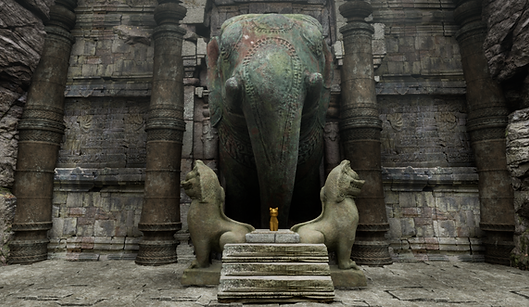
Shrine Sprint is a tomb-raiding parkour game developed in Unreal Engine 5. Players take on the role of an explorer venturing into a perilous ancient tomb in search of hidden treasures, all while avoiding deadly traps and environmental hazards.
Overview
Situation
The project’s core goal was to create a fast-paced, high-pressure escape experience, while using coin collection, environmental challenges, and narrative framing to strengthen exploration and immersion.

Task
My responsibilities on this project focused on two main areas:
-
First, using Blueprints to develop dynamic traps as part of the gameplay systems to increase challenge and interactivity.
-
Second, contributing to level design and environmental narrative to reinforce the tomb-adventure atmosphere through worldbuilding and scene presentation.
Action
On the gameplay side, I designed the timed escape prototype and iterated on pacing, tension, and control flow based on player feedback under countdown and chase pressure.
On the technical side, I used Blueprints to build the dynamic trap system and contributed to gameplay feature development, completing roughly 80% of the project’s core mechanic implementation while also participating in part of the level whiteboxing and environmental narrative setup.
On the narrative and presentation side, I designed the project’s environmental storytelling and world framing, using the relationship between tomb spaces, dangerous mechanisms, and escape objectives to strengthen the player’s sense of “explore deeper — trigger danger — escape under pressure.”


Result
In the end, Shrine Sprint delivered a runner experience built around high-speed escape, dynamic traps, and tomb exploration, successfully integrating core gameplay, level challenge, and environmental storytelling into a cohesive flow. Through this project, I gained more Unreal Engine 5 gameplay development experience, helped the team solve technical problems, and further learned how to use environmental narrative to support level goals and strengthen player immersion.